

Breast Milk Feeding & Safe Bottle Sterilization
A Pediatrician’s Guide to Protecting Your Baby from Infections
Breast milk remains the gold standard of infant nutrition. It provides complete nourishment, strengthens immunity, and protects babies from infections and allergies.
Whenever possible, direct breastfeeding should be the first choice.
However, there are situations when mothers may need to express breast milk — such as returning to work, illness, or temporary separation. In these cases, choosing the right feeding method and proper sterilization becomes essential for your baby’s health and feeding success.
This guide explains safe alternatives and the correct way to sterilize bottles to reduce infection risk.
Why Direct Breastfeeding Is Best
Direct breastfeeding offers:
Optimal nutrition
Stronger immunity (antibodies)
Better bonding
Reduced infection risk
Proper jaw and oral development
No contamination risk from utensils
It also prevents nipple confusion, which can happen when babies get used to artificial nipples.
Expressed Milk: Cup and Spoon Feeding Is Safer Than Bottles
If direct feeding is not possible, cup and spoon feeding is strongly recommended.
Why avoid early bottle use?
Bottle nipples allow milk to flow easily with minimal effort. Babies may:
Prefer the bottle
Refuse the breast
Feed less effectively
Develop “nipple confusion”
Cup and spoon feeding:
✔ Maintains breastfeeding habits
✔ Reduces dependency on bottles
✔ Lowers infection risk
✔ Is recommended in many neonatal and pediatric settings
When Bottle Feeding Becomes Necessary
In some situations, bottles may be unavoidable. If you must use one:
👉 Strict sterilization is essential
Infants have immature immune systems. Contaminated bottles can lead to:
Diarrhea
Vomiting
Gastrointestinal infections
Hospital visits
Proper hygiene significantly reduces these risks.
How to Sterilize Baby Bottles Safely
Method A — Use a Sterilizer (Recommended)
Electric or steam sterilizers provide:
✔ Reliable disinfection
✔ Convenience
✔ Time-saving
✔ Consistent results
Follow the manufacturer’s instructions carefully.
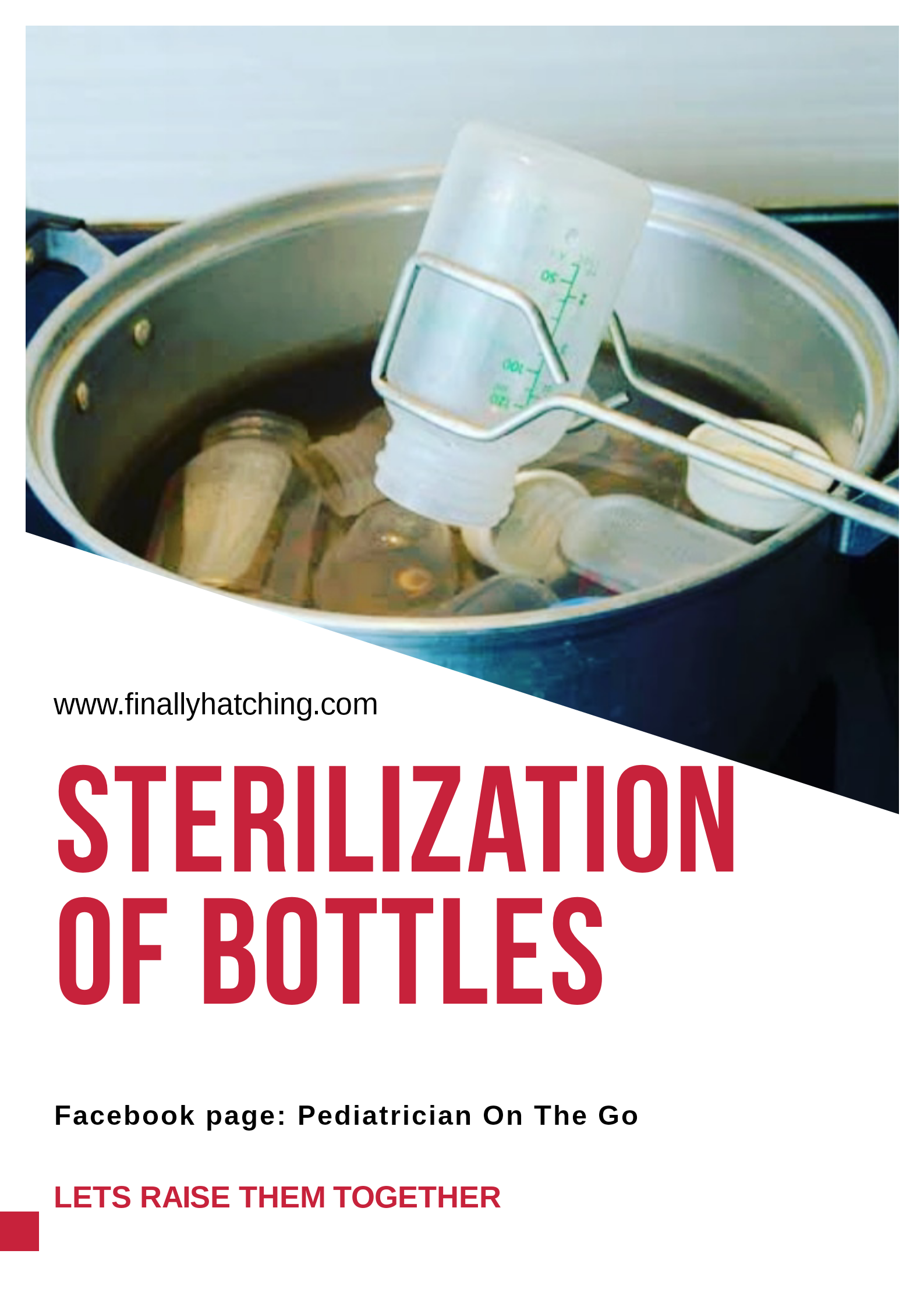
Method B — Boiling Water Sterilization (Home Method)
If a sterilizer is unavailable, use this effective boiling technique.
Step-by-Step Process
1. Choose Safe Bottles
BPA-free plastic bottles OR
Glass bottles
Keep at least four bottles for rotation.
2. Wash Thoroughly
Wash bottles, nipples, and caps with soap and clean water
Rinse well
3. Boil
Fill a large clean pot with enough water to cover all bottles
Submerge bottles upside down
Bring water to a rolling boil
Boil for 5 minutes
4. Remove Safely
Turn off heat
Use clean tongs to remove bottles
Avoid touching inside surfaces
5. Air Dry
Place on a clean, dry cloth
Allow to air dry naturally
Do not wipe with towels (may reintroduce germs)
6. Use One Sterilized Bottle Per Feed
Never reuse without washing and re-sterilizing.
Essential Hygiene Tips for Parents
Wash hands before preparing feeds
Prepare milk fresh each time
Avoid storing leftover milk in bottles
Clean feeding equipment immediately after use
Replace cracked or worn nipples
Consistency prevents infections.
Key Takeaways
✔ Breastfeeding directly is best
✔ Use cup and spoon when expressing milk
✔ Avoid early bottle dependence
✔ Sterilize bottles properly if required
✔ Hygiene protects your baby from illness
Simple precautions make feeding safer and healthier.
Quick Summary Table
| Situation | Best Method |
|---|---|
| Direct feeding possible | Breastfeeding |
| Expressed milk | Cup & spoon |
| Bottle unavoidable | Strict sterilization |
| Sterilization option | Steam sterilizer or boiling |
FAQ
How often should baby bottles be sterilized?
After every use, especially for infants under 6 months.
Is boiling enough to sterilize bottles?
Yes. Boiling for 5 minutes effectively kills most germs.
Can I skip sterilizing if bottles look clean?
No. Invisible bacteria can still cause infections.
What is safer — bottle or cup feeding?
Cup and spoon feeding is safer and avoids nipple confusion.


Leave a Reply